
Designing a custom embedded system for industrial applications is a complex yet rewarding process that demands careful planning, precise execution, and a deep understanding of both hardware and software requirements. This article provides a comprehensive step-by-step guide to help you create a robust and efficient system tailored to your industrial needs.
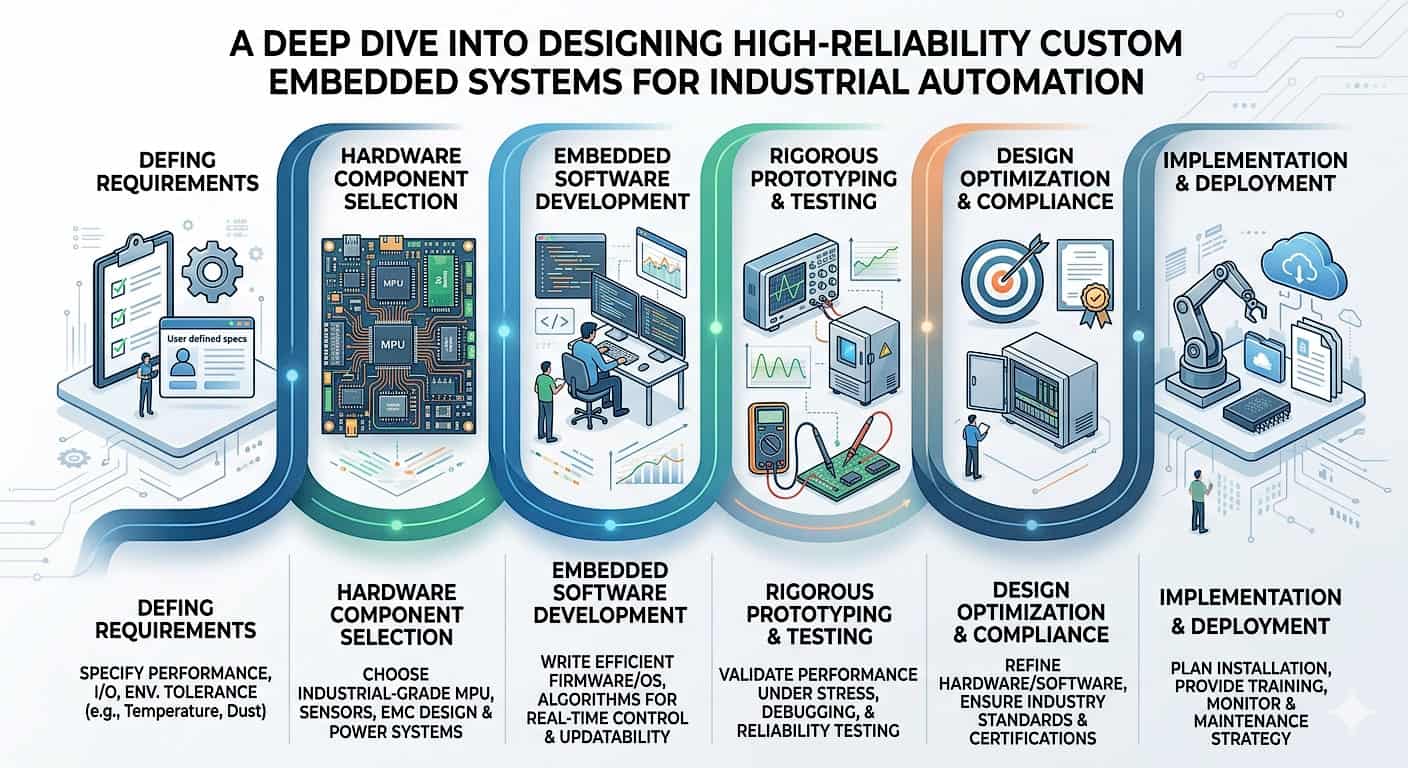
Step 1: Define the Requirements
The first step in designing an embedded system is to clearly define your requirements. This involves understanding the specific industrial application and identifying the key functionalities your system must support. Consider environmental constraints, such as temperature extremes and exposure to dust or moisture, and ensure compliance with relevant industry standards and regulations. Key factors to evaluate include power consumption, processing speed, connectivity options, and overall durability.
Step 2: Select the Hardware Components
Once the requirements are defined, the next step is selecting the appropriate hardware components. This involves choosing microcontrollers, sensors, communication modules, and power management systems that align with your specified needs. It’s crucial to ensure that all components are compatible with each other and can withstand industrial conditions, such as temperature fluctuations and mechanical vibrations. Additionally, consider the availability of components and the ease of sourcing them for future scalability or repairs.
Step 3: Develop the Software
Developing the software is a critical phase where you create the firmware and algorithms that will manage the hardware components. Focus on developing efficient algorithms for data processing and ensure the system can perform its tasks in real-time. Use reliable development tools and consider implementing an operating system if your application’s complexity warrants it. Ensuring the software is scalable and easily updatable is also crucial for long-term viability.
Step 4: Prototype and Test
Creating a prototype allows for thorough testing and validation of your system’s design. Conduct rigorous testing to assess performance under various conditions, ensuring reliability and accuracy. Test parameters such as processing speed, power consumption, and resilience to environmental factors like electromagnetic interference. Use the testing phase to identify any potential weaknesses or areas for improvement.
Step 5: Optimize and Finalize the Design
Based on your testing results, optimize the design to enhance efficiency and performance. This may involve tweaking hardware configurations, refining software algorithms, or improving the system’s user interface. Ensure that the system meets all necessary industrial regulations and standards, which may require additional certifications or testing.
Step 6: Implement and Deploy
With a finalized design, you can proceed with implementation and deployment. Plan the installation carefully, considering factors like scalability, maintenance, and integration with existing systems. Ensure that your deployment strategy includes comprehensive training for end-users and support staff, as well as a robust maintenance plan to prevent downtime and extend the system’s lifecycle.
Conclusion
Designing a custom embedded system for industrial applications requires meticulous planning and execution. By following these steps, you can create a system that meets your specific needs and enhances the efficiency of your industrial operations. For further assistance or specialized guidance, don’t hesitate to reach out to experts in the field.